

F2059 LED Point Light
The F2059 LED Point Light delivers precise, DMX512-controllable RGBW illumination with a durable PC body and IP67 rating, making it a reliable choice for architectural lighting.
View productBuying a wholesale led grille screen programme starts with a panel you can reorder, service and ship without surprises, and with an led grille screen manufacturer who publishes the numbers behind it. This trade guide walks through the P25 outdoor LED grille screen — its 25 mm pixel pitch, die-cast aluminium box and fan-free cooling — then covers cost drivers, freight logic, OEM scope and the questions worth asking any supplier before you commit to a container order.
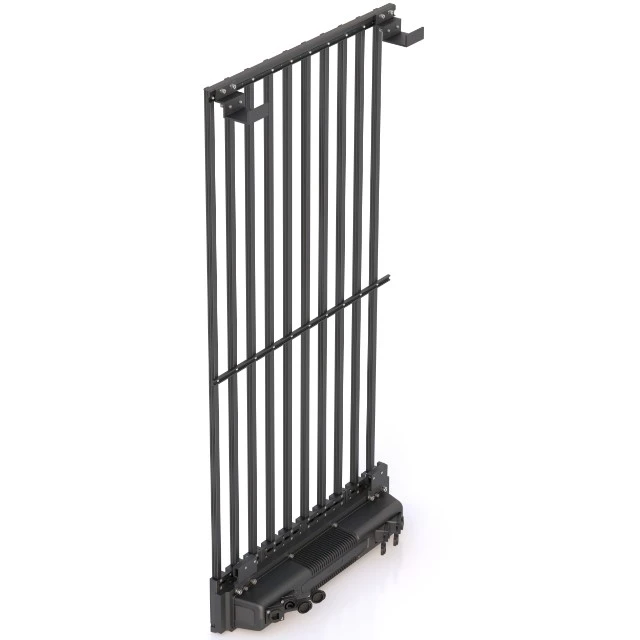
Four grille models share one platform: P15.6, P15.6-31, P25 and P25-50. Pixel density, brightness, permeability and panel weight are the four rows that change how a facade looks, how much steel it needs and what the freight bill says, so compare those first and treat the common rows as the baseline they are.
| Parameter | P15.6 | P15.6-31 | P25 | P25-50 |
|---|---|---|---|---|
| Pixel density | 4096 pix/㎡ | 2048 pix/㎡ | 1600 pix/㎡ | 800 pix/㎡ |
| Brightness | >10000 nit | >8000 nit | >6000 nit | >4000 nit |
| Permeability | >30% | >60% | >53% | >71% |
| Panel weight | 16 kg/㎡ | 11 kg/㎡ | 12 kg/㎡ | 9 kg/㎡ |
| Unit size | Normal 1 m × 0.5 m | |||
| Pixel composition | 1R1G1B | |||
| Light bar width | 10 mm | |||
| Illumination angle | Horizontal 80° × vertical 80° (±10%) | |||
| Gray scale | Class 65536 | |||
| Grayscale refresh rate | 18 kHz | |||
| Control mode | SPI | |||
| Control card | Nova, Cartwright | |||
| Voltage | AC100–240 V | |||
| Degree of protection | IP67 | |||
| Operating temperature | −40 °C ~ 50 °C | |||
| Power supply + control box | Die-cast aluminium box | |||
| Power | Listed as 600 W/㎡, 500 W/㎡ and 300 W/㎡ across the model columns; per-model mapping is not published | |||
| Average power | Listed as 300 W/㎡, 250 W/㎡ and 150 W/㎡ across the model columns; per-model mapping is not published | |||
| Cell resolution | Listed as 32 dot × 64 dot and 20 dot × 40 dot | |||
| Certification | CE, ROHS, FCC | |||
Rows reproduced as listed on the P25 product page. The page's Features section quotes a single panel at 15 kg/㎡, roughly 40% of a traditional panel, alongside the per-model weights above — confirm your model's packed weight and power figure in writing at quote stage.
Two grille panels of the same size can differ several times over in price. These are the six variables that move a quote, and each one is a decision you can make deliberately rather than discover later.
P25 carries 1600 pixels per square meter; P15.6 carries 4096. More pixels per square meter means more LEDs, more driver channels and more assembly time — the single largest lever on unit price.
The product page specifies high-bright DIP LEDs for the P25 range. Ask which LED package is quoted for your project, because it sets both brightness and cost.
P25 uses an efficient PFC dedicated power supply. The page states 50% energy saving compared with a traditional display, so the power architecture belongs in the comparison, not just the purchase price.
The die-cast aluminium box is the structural and thermal heart of the panel. It is also why the display needs no fans, air conditioners or separate heat dissipation system.
Open area and pixel density trade against each other. Higher permeability keeps more daylight and airflow but reduces resolution — decide what the facade needs before you decide what it costs.
Nova and Cartwright cards are listed for the range. Compatibility with the media player in your existing system belongs in the specification from day one.
The standard unit is 1 m × 0.5 m, so one panel covers 0.5 ㎡. On a facade of any real size you are buying tens or hundreds of panels plus the steel behind them, which is why per-square-meter pricing is the only figure that lets you compare two suppliers fairly. Always ask whether the quoted rate includes the box, the power supply, the control card and the steel structure.
Panel mass is a freight decision before it is a display decision. Lighter panels mean more square meters per container and less steel behind the facade — and steel and shipping are where grille screens win against solid outdoor cabinets.
The same product page states 70% steel structure cost saving, 80% labour cost saving, 75% transportation cost saving, 80% maintenance cost saving and 70% electricity cost saving versus a traditional display. Ask the supplier to show the assumptions behind those numbers for your facade size.
The specification table lists panel weights from 9 kg/㎡ to 16 kg/㎡, and the Features section quotes 15 kg/㎡ per single panel with a steel structure at 10 kg/㎡. On those figures a 100 ㎡ display is roughly 0.9–1.6 t of panels before structure — request packed weight per panel, not just unit price.
The product page does not publish a minimum order quantity or a lead time. Treat any verbal figure as provisional: ask for both in writing, and ask whether they change with a custom cabinet colour or a non-standard order quantity.
Front and rear access panels mean a panel can be replaced from inside or outside the building, quoted at about 10 seconds per square meter. Agree a spare-panel ratio and spares pricing with the order, not after the first failure.
Customization questions are where trade buyers separate a supplier from a reseller. Here is what the product page already confirms, and what you should raise in your own enquiry.
Optional colours are available and can be customized according to customer requirements. The box is die-cast aluminium, the control card options are Nova and Cartwright, and the page states the design is flexible and adaptable to multiple installation methods.
Branding on the cabinet, custom packaging and non-standard panel sizes are not published on the page. Ask directly and ask for confirmation in writing, with the sample or drawing attached to the quotation.
The P25 is the model documented in full on this page. These are the figures a facade or AV consultant will ask you to substantiate, grouped so you can send them straight into a project file.
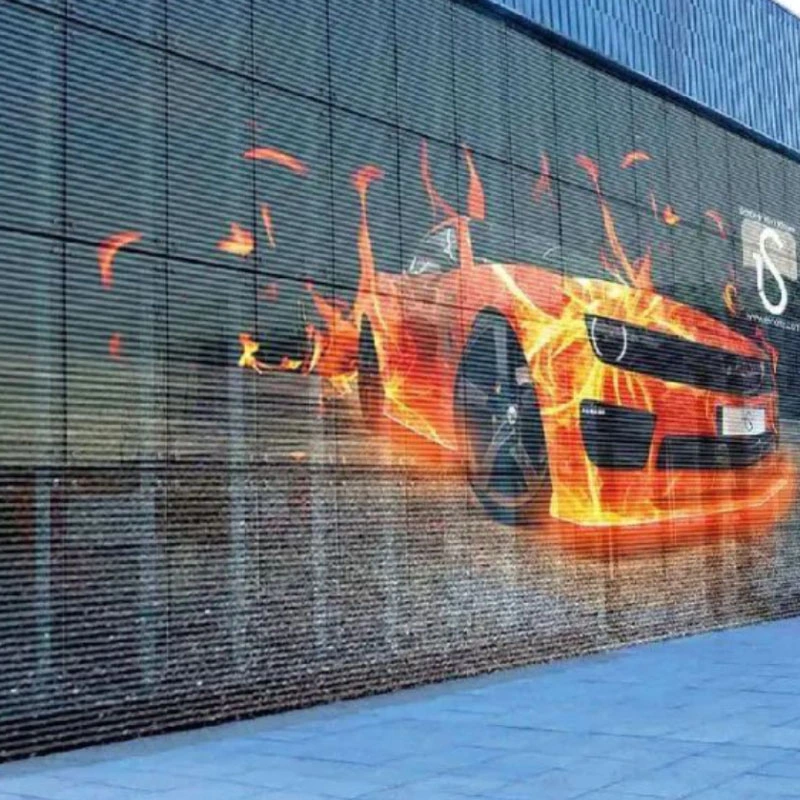
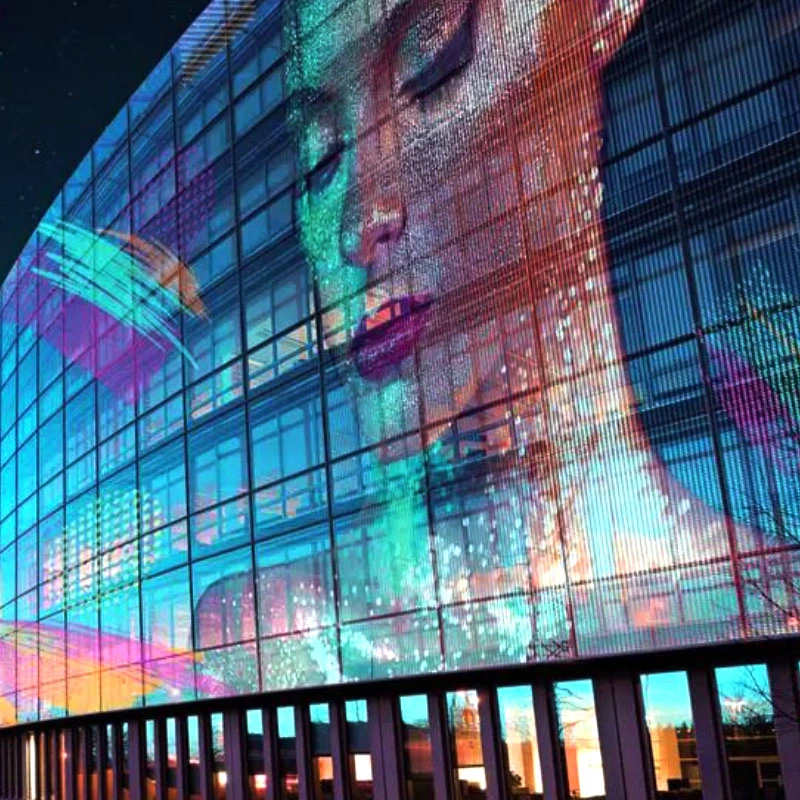
The Features section quotes 35%–60% light transmittance through a hollowed-out box structure, which keeps building lighting and airflow working while the display runs. The permeability row in the specification table lists >30%, >60%, >53% and >71% across the four models, so confirm the value for the exact model you specify.
Heat dissipation is passive: no fans, air conditioners or separate cooling systems are required. Power draw is configuration-dependent — the page's quick parameter block lists 300 W–600 W and the body copy describes 150 W/㎡ to 300 W/㎡ depending on configuration. Maintenance is front and rear access, with panel replacement quoted at about 10 seconds per square meter.
Copy these six items into your enquiry and you will receive a comparable quotation instead of a list price. Everything below is written so a supplier can answer it with numbers.
Give the display width and height in meters and the closest and furthest viewing distances. Those two figures decide the pixel pitch more than any other input.
State your model preference and the daylight and airflow you need to keep. Permeability and pixel density trade against each other, so name the priority.
Quote both, remembering that one standard panel covers 0.5 ㎡. Ask whether the rate includes the die-cast box, power supply, control card and steel structure.
Request packed weight and dimensions per panel so you can compare freight between suppliers on a like-for-like basis.
List the cabinet colour, control card, branding or packaging you need, and ask which of them change the minimum order quantity or the lead time.
State the delivery country and ask for the CE, ROHS and FCC paperwork, the warranty terms and the spare-panel recommendation with the quotation.
Send your facade size, viewing distance, quantity and destination country. We will come back with a per-square-meter quotation, the packed weight per panel and the current minimum order quantity.
Keep adjacent product options together for a faster catalog comparison.
The F2059 LED Point Light delivers precise, DMX512-controllable RGBW illumination with a durable PC body and IP67 rating, making it a reliable choice for architectural lighting.
View product
The YH LED Point Light delivers precise, DMX512-controllable RGBW illumination with a durable PC body and IP67 rating, making it a reliable choice for architectural lighting.
View product
The YG LED Point Light delivers precise, DMX512-controllable RGBW illumination with a durable PC body and IP67 rating, making it a reliable choice for architectural lighting.
View productIt is an outdoor architectural display built on a grille panel with a hollowed-out box, so it suits building facades that need to keep daylight and airflow. The product page describes it as a high-brightness module for outdoor use with a 25 mm pixel pitch, ip67 protection and a die-cast aluminium box.
The features section quotes 35%–60% light transmittance through the hollowed-out box structure. The specification table's permeability row lists >30%, >60%, >53% and >71% across the four models, so ask for the exact figure for the model you specify.
The range is rated ip67, and the page states a dedicated outdoor waterproof and lightning-protection design. Confirm the supporting documentation for your destination and mounting method before you place the order.
The page states that optional colours are available and can be customized according to customer requirements, with nova and cartwright control cards listed for the range. Branding, packaging and non-standard panel sizes are not published, so raise them in your enquiry and ask for written confirmation.
Installation is described as a single-person task with front and rear access to the display, and panel replacement is quoted at about 10 seconds per square meter. Because there are no fans, air conditioners or separate cooling systems, there is no cooling hardware to service.
Send your facade size, viewing distance, target model, quantity and destination country through the contact page. Minimum order quantity, lead time and price are quoted per project and are not published on the product page, so they should be confirmed in writing.

